





Lightweight aggregate concrete LWAC
Lightweight concrete is a general term for various concrete solutions with reduced weight including air pockets, lightweight aggregate concrete is a specific solid concrete solution that makes use light weight aggregates with minimal air voids. It is usually made with a mixture of lightweight coarse aggregates such as expanded shale (shale heated to over 1000 degrees C), slate, clay, pumice stone, ash, perlite and some other minerals.
Some of the earliest lightweight concretes, even before the Roman empire used pumice from Italy or Greece with burnt and hydrated lime. The Romans however by removing the impurities of lime such as silica, alumina and iron oxides started to produce stronger binders, known as grey lime, and stronger concrete, which today we refer to as Roman concrete. As part of this development, lightweight aggregates continued to be used but with the use grey lime producing stronger light weight concrete construction results.
Likewise, though sometime later with the introduction, in the early 1820's by an English bricklayer named Joseph Aspdin, of pulverised impure siliceous materials and raw limestone, better known now as Portland cement, the strength possibilities of lightweight aggregate concrete were yet again significantly improved. By 1840's this lightweight and effectively floating material was used to build the first concrete shi, a dinghy built by Joseph Louis Lambot in France and featured at the 1855 World Fair.
In the early 1900's, prior to the war, the introduction of heat applications to expand certain minerals such as slate, clay and shale, further opened opportunities in connection to light weight concrete. By the time the war came and as a result of material shortages, lightweight concrete received further consideration and investment, for the building of ships to replace steel which was in short supply. In 1917 shortages of high-grade plate steel lead to US shipbuilding programs using materials other than steel, of which lightweight aggregate concrete was a forerunner, because it had the potential reduce the deadweight of ships whilst maintaining the strength and durability required, thanks to previous advancements.
It was shortly after this that the benefits of lightweight aggregate concrete seen in shipbuilding were proposed as being advantageous to construction, reducing both the steel reinforcement and the concrete needed to construct towers through the reduced dead loads on the structures. As a result the first lightweight aggregate concrete building, a school in Kansas was constructed, others followed, notably the advantage of the product was applied to high rise buildings, effectively allowing buildings to be built taller due to reduced structural loads, with the first high rise, a 28 storey building, the Chase park Plaza in Chicago and the first high rise built from light weight aggregate concrete being completed in 1928.
Since then lightweight aggregate concrete as a solution for the construction of further towers, bridges and shelters continued. Today structural lightweight aggregate concrete continues to be used as a construction solution. Contemporary products vary but in-place densities of 90 to 115 lb/ft³, compared to regular weight concrete with ranges ranges from around 140 to 150 lb/ft³.
[edit] Related articles on Designing Buildings
- AC
- AAC
- Aggregate.
- Alkali-activated binders for precast and ready-mixed concrete products: New supply chains, business models and environmental benefits.
- Alkali-silica reaction (ASR).
- Binding agent.
- Cement.
- Cement-free precast product.
- Cement mortar.
- Concrete.
- Concrete masonry unit CMU.
- Ferro-cement.
- Fibre cement.
- High alumina cement.
- Lime mortar.
- Limestone calcined clay cement LC3.
- Mortar.
- Mortar analysis for specifiers.
- Mundic.
- Plaster.
- RAAC.
- Portland stone.
- Screed.
- Shotcrete technology.
- Stucco.
- Thomas Edison's concrete cottages.
- Types of cement.
- Types of concrete.
- Portland cement.
[edit] External links
https://www.escsi.org/wp-content/uploads/2017/10/7600.1-Lightweight-Aggregate-History.pdf
Featured articles
Check out some of the best features and news from Designing Buildings as well as key stories from around the web.

Why construction can't afford to ignore the skills gap.
Building Safety Regulator, 19 August

Gill Kernick appointed Independent Chair of Residents’ Panel.
Connecting knowledge, technology and conservation
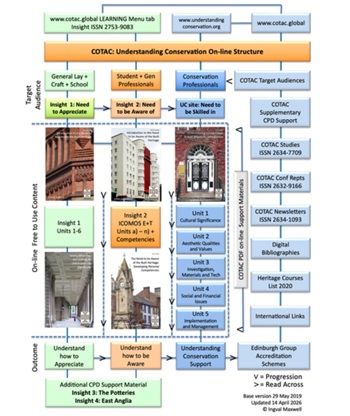
Building competence for the future of built heritage.
Building Regulations and Building Safety Act

CIOB publishes free advice for non-domestic clients.

Building Safety Newsletter from MHCLG.
An extraordinary record of steel engineering worldwide.

Households living near new pylons to save on bills.

ECA warns growth must not outpace grid capacity or skills.
The role of the client and decision making

CIOB response to built environment professions call for evidence.
Construction's sustainability reporting revolution
Tracking upfront embodied carbon with digital tools.
ECA welcomes procurement reforms

Public spending must back British jobs and skills.
Campaigning for Edinburgh: the Cockburn Association 1875-2049

The role of the civic voice in protecting character. Book review.